Have you ever wondered what drives a person to crime writing? One can always blame her parents for whatever it is that parents do when they create monsters from the dark side. There are next-door neighbours too that one can blame – how often have you looked at a twitching net curtain and asked yourself, what are they doing in there? And what guilt do librarians bear for doling out books as though they were placebos, when in fact they are pushing mind altering ideas onto impressionable young minds. People often gang up on television schedulers too for the damage they have caused society, but surely, loud-voiced parsons, reading saucy extracts from the first testament of the Bible, have twisted more minds than the complete works of Shakespeare ever did. Looking back, I guess it was the combined efforts of everybody around me which finally pressurised me into my first offence, a thriller called Toxic Love.
After all, when a friend phones my mother to tell her that Agatha Christie is on the television, or a fellow patient in the hospital scours the tv guides, every day, looking for a ‘good murder’ to watch, it leaves one punch drunk, wondering if it is they, or the rest of the world which has gone mad. All around me it seems that murder has become every day; normalised by middle-aged, female sleuths in tweeds skirts. Their repressed sexual urges, no doubt, lead to a morbid fascination with crime and gives them a twisted insight into the minds of the most hideous criminals imaginable. Such mild, inoffensive spinsters of the parish become nemeses of the most formidable kind who we watch, fascinated, as they bring yet another murder to justice. Being exposed to such programs daily, I believe, is as harmful to a person as being irradiated by the lies spread by Fox NEWS 24/7, or as dangerous to a person’s sanity as over exposure to Judge Judy. A mild dosage may be safe, but like food-additives, too many may cause unforeseen side-effects.
Take me, for example, a simple man, leading an innocent life until locked down during covid with a murder mystery fan. Like a teenager faced with a choice of dabbling in drugs or be rejected by their peers, I thought that I could control my world, that I would be unaffected while sitting alongside my mother in the sitting room and dabbling in mystery. Soon, like the teen who once sneered at others who had allowed drugs into their lives, I required stronger and stronger doses of the murder mystery drug to keep the pain of life at bay. Shame, of course, played a large part in my life, how can one openly admit to such a problem, and 12 step programs for crime fiction addicts are not as readily available as they should be. Soon the nightmares began.
I would see myself walking down a normal street, a drizzle of SUVs passing by. Then people alighted from the cars, mostly women, looking for all the world like librarians – not a botoxed-lip in sight. There was always an over-weight man too, one with food issues, who wore a misanthropic frown. Then, as happens in dreams, there was always a body lying on a carpet, a footpath, or ritualistically laid-out in a field. The body was invariably mine. And looking up to the ceiling, or the sky, as though I were an infant unable to turn over on its stomach and crawl away, I would find myself surrounded by gaggles and gaggles of would-be, amateur sleuths who viewed my murder as a cause for celebration, a mystery to be solved. I hated that all the fun of unravelling my murder mystery fell to them and that I was helpless to discover who had killed me. Although I should have known, you would think, who murdered me. The victim normally knows who has killed them. Maybe it was PTS which blocked out the memory of my own murder. Or maybe… But of course, I wasn’t really dead. This was my dream after all. And if you have not really been murdered, then remembering the killer’s face is rather difficult.
These nightmares shook me, stirred me, drove me to the edge of desperation. But worse was to come, a strange madness possessed me and the seeds of Toxic Love, my first crime novel, rooted themselves deep into my brain. No amount of systemic weedkiller could have prevented them from germinating and growing into the twisted tale that they became as the novel developed to full-term and bore me into the world of crime writing.
Though not a murder mystery, there is still a female lead. However, she is a sassy young woman, not a pitiable old bat. There is a sinister ex-boyfriend too, some rather eccentric old women and a man once convicted of murdering his wife. There is also a game afoot; a terrible, sinister, murderous plot; and our heroine is its intended victim. For all the gory details go to Amazon and search out Toxic Love. But first you might want to listen to me read the first chapter of the book on Spotify and so get a feel for where the book might be going.
As for me. My name is Jim and I am addicted to crime writing… The second instalment is already underway.
My mother went into hospital last week with a chest infection. Her last instruction, before being admitted, was for me to place a bet on a horse that ultimately came in 3rd. I can’t blame our fish and tips man for that. It would be petty because he has given us too many winners to complain about a favorite coming in 3rd. Following orders from she who must be obeyed, meant snailing around the Electric Picnic traffic which clogged every road in Portlaoise as I headed bookie-wards. In stalled traffic I had time to notice ripe blackberries in almost every hedgerow and got to thinking.
My initiation into the art of BlackBerry picking featured both my mother and my grandmother; there was also pony racing taking place in the background. I think the whole escapade may have been my grandmother’s idea, it was certainly she who pointed out the fruit laden hedges as we made our way through the turnstiles into the grounds for the event. After doing her duty, by pointing out the bushes, she immediately deserted us for the bookie stands, leaving my siblings and I with no helpful hints on how to grab the fruit without being stung by nettles, impaled on briers, or attacked by man-eating maggots. The maggots seem monstrously huge to this clear sighted ten-year-old.
So, while my mother and my grandmother fluttered, while ponies ran in circles and sweated, and as the smell of fresh manure grew stronger by the minute, I slowly mastered the art of the pull-and-turn to get fruit from the bushes. Too strong and you squish the berries to death, too loose and you drop them.
Soon my fingers were swollen from nettle stings, thorns drew blood from the back of my hand and my neck was sunburned, because sixties mothers did not use sunblock. A warm wind blew around me, race commentaries cut through the cheering crowd and my mouth came alive to the deep, dark taste of warm blackberries.
The truth is that the blackberries scared me more than a little. Maybe it was the maggots I met along the way. These seemed to stick their heads out and squirm in the light of day, like Groundhogs being pulled out of hibernation to give their spring weather forecast. Of course, that’s presupposing I was looking at their heads. I’m not sure that they were not mooning at me, or perhaps they shared a common gene with an ostrich and, not having sand, stuck their heads into the fruit in an attempt to drown themselves, in its juices.
Anyone who has visited my YouTube channel will know that I appear to have an unhealthy obsession with the BlackBerry and even the humble apple at this time of year. If I were being cheeky, I would call what I am doing, ‘mindfulness.’ Though, in truth, for that to be the case, the mind should be empty, not swamped by blackberries. It is a very strange experience, but every year after my fruit picking ordeal, I suffer a sort of post-traumatic stress syndrome. It is as though I have survived an ordeal that may have permanently scarred me. For weeks afterwards, every time I close my eyes, my mind’s eye, my neurological cortex, projects images of wall upon wall of blackberries. Every shape and hue is represented; sometimes moving, sometimes not, always sitting there, behind my eyes, teasingly beyond reach. OK, mindfulness, maybe not. More as though an abundance hypnosis session has gone into nightmare mode.
You know the feeling, the voice in your ear buds may be telling you to concentrate on abundance, there may be soft music playing in the background, or the sound of gentle rainfall, but as the voice encourages you to walk along a stream, somehow your mind strays to images of your own. At this time of the year, as my post-traumatic stress is triggered by bushes weighed down by blackberries, I find my mind strays from the path of suggested images, to imaginings of golden apple syrup or ditches laden with blackberries. And the soundscape in my head changes too, from one of computer-generated pan pipes, to one of hissing winds, of humming wasps, the chirping of nearby birds and lowing of distant cows. As abundance goes, you could do worse, especially as other people’s cliche ideas about money, cars, houses and body tattoos are not always for you.
Driving home, it occurred to me that someday soon I may just be discovered by passing strangers, standing up to my ankles in nettles, arms outstretched, reaching as far as I can for the juiciest berry in the bush. And though they will not see it, I will be hearing ponies hooves race over hard ground, a tannoy screeching in the distance and a huge crowd cheering home a winner. Hopely, they will witness an enormous blackberry fall safely into my hand. Like a fisherman, the berry picker’s life is a solitary one, which is why he will always have tales of the one that got away or was just out of reach; stories that only other pickers would voluntarily listen to, or understand. Oh dear, it seems that I am actively bringing on another bout of post-traumatic stress syndrome, and I haven’t even picked a berry yet. I still remember my grandmother chiding us when she returned with her days winnings, for failing to bring a bag with us when we went picking the berries. We were too full, too tired, too warm, and too dirty to argue. The next time my grandmother stopped at a hedge to teach us a life lesson, it was mushrooms we picked. This time she had the foresight to brine a bag, a Harrods bag if I remember correctly.
Listen to this blog on spotify
Picking even a few blackberries can be worthwhile.
This is a strange one, a bonnie, bonnie strange one. Be warned, now is the time to avert your gaze, or plug up your ears. Be advised, we’re entering Joyce territory. God, but I’m going to feel really stupid reading this blog.
You see, Bloom’s Day is upon us, ‘Yes, Yes, Yes!’ Or maybe no, not for you. Perhaps you are one of those who refuse a breakfast of devilled kidneys, not because veganism is the latest short cut to enlightenment, but because you can imagine that the lingering taste of urine, hinted at by Joyce, haunts kidneys you might otherwise enjoy. Ulysses and urine, there is so much of the stuff one wonders if Myopic Jimmy is taking the piss. Allegedly, James Joyce’s masterpiece is full of humour, but ask yourself who these critics are before agreeing with them.
First, I must say that this blog is prompted by my mother’s reaction to RTE’s promotion of all things Bloom, no, not the annual flower show in the Phoenix Park, Bloom as in Ulysses. Our national broadcaster is obsessed by the work. The D4 crowd are so taken by it that they believe Molly’s famous potty-sex monologue is a perfect marmalade and toast accompaniment. Thankfully, the yes, yes, yesing in the background never seems to penetrate my morning mind-fug. The advertisements would go unnoticed, pass me by, as though they were news headlines, except that they wake up the critic in my mother. RTE’s harmless potty-sex fetish, no doubt a tonic to Joyce scholars everywhere, makes this one-hundred-year-old book, or its promotion, a problem for me. You see, just a snippet of the monologue can irritate my mother for hours on end. And she shares her irritations with me, which is why I’m writing this blog. This is a stress relief exercise on my part, one which should keep me sane until the 16th of June has passed.
“Doggerel,” is often my mother’s, pre-nine a.m. opening gambit. And she is not criticising me for a change. “I heard someone call that book poetry, but another critic said his poetry is pure doggerel. Not a poetic bone in his body. You can’t have it both ways.”
My mother likes the romantics, so I stay dumb by way of keeping my head attached to my shoulders. As the add rumble on she becomes even more annoyed.
“Nothing more than an alcoholic.” She tells me, “And as for that Nora Barnacle, her ignorance probably made him feel big about himself.”
“Would you prefer them to be promoting a reading of ‘Normal People’?” I ask by way of distraction. “They say she’s the new Joyce.”
In fairness my mother will not be distracted, so I get an extra ten minutes of criticism on Joyce.
Reflecting on her comments and sometimes comparing Ulysses, in my own head, to ‘Normal People,’ (yes I realise that this is a ridiculous activity,) I had a sudden, Eureka moment. You should never listen to critics; you will find life much more enjoyable without looking over your shoulder to see if they are watching before allowing yourself pick up an Agatha Christie. Having said that, here is something you might want to bring to Joyce’s masterpiece.
Joyce is nothing more than an intellectual Benny Hill, a man with a urine fixation, a purveyor of bum jokes disguised as literature. A man of his times in fact, a time when you had to make your own fun, when neighbours were for laughing at and bodily waste-fluids were stored under your bed at night. Stepping in dog do-do was a cause for laughter among friends and, as for falling on your bum, that caused hilarity all round for months on end.
My grandmother was born at practically the same time that the Bloom’s Dublin odyssey took place. For most people, this was a time of outdoor plumbing, with chamber pots serving as primitive ensuites. Say what you will about them, squatting over one every night was a great form of granny yoga, a way to keep the old supple enough to function on a daily basis. Fancy potties were decorative to the point of competing with Ming dynasty vases, tin sufficed for poorer bums. It was a time when limps, squints, and stammers were openly mocked, and as far myopic young lads were concerned, they were the joke.
My grandmother and her friends were all practical jokers and none of them would have needed to read Joyce to improve their minds. Their minds were active enough already and their neuroses formed the foundations of their individuality. Potties would have featured in all of their lives. But they would never have considered writing a doctorate paper on the symbolic significance of Molly straddling one. There were other, more humorous uses for the potty in their lives. My grandmother, about the time Joyce was presenting Ulysses to the world, came up with a novel use for the chamber pot. This was a new pot, I hasten to add, a decorative one. My grandmother was having guests to dinner, and this was a special occasion. The food was good, it was always good where my grandparents were concerned. My grandmother made her famous onion soup (as served in her restaurant) and poured it into her tureen for the day. She then walked into the dining room, placed her new chamber pot on the table and invited everyone to present their bowls.
As gags go, I’ve seen worse.
As writers go, Joyce would miss the cut on my comic writers list. But at least a woman on a potty, scratching an itch, and screaming yes into the night is a positive scene. Molly knows what she wants and does something about it. Yes, she does. Yes, yes, she does.
The millennial tale Normal People might be considered a masterpiece by many, but I ask you, where is the fun in the work?
Imagine a millennial style sex scene in Ulysses: Bloom enters Molly’s chamber late at night, drunk but standing, he tells her to get off the piss pot. This might be the conversation which follows.
Molly: “Do you want to fuck me?”
Bloom: “Yes.”
Molly: “I want to fuck you too.”
Bloom: “We will need each other’s written consent first.”
Molly: “Yes.”
Bloom: “And have to get naked.”
Molly: “Yes.”
Bloom: “And to…”
Molly: “Yes”
Bloom: “And…”
Molly: “Yes.”
Bloom: “And an orgasm?”
Molly: “No. No. No… Not for me. For you maybe, but not for me. For me sex and disappointment must forever remain linked.”
Would Molly ever dream of being so drearily normal? Maybe Joyce is not a lost cause after all. Still, I will never convince my mother to change her mind on the subject. Nor would I want to. And as Bloom’s Day approaches I can not imagine my mother incanting the words, yes, yes yes: unless, of course, she discovers a free, wheelchair parking place at the steps to the library.
Friday mornings, I go shopping with my mother, whether this is an ordeal or a pleasure I have never quite decided. The ordeal begins, oops. Anyway, before the shopping can begin, the wheelchair parking badge must be removed from my mother’s car and displayed in mine. This badge warrants a blog of its own, let’s just say that at 93 years of age my mother has finally been granted a wheelchair parking permit. The downside to this is that, although there may be many car parking spaces available in the car park, I must take on Friday’s inevitably chaotic traffic and do a drive by of the wheelchair parking spaces close to the supermarket’s entrance. Only after we are certain that they are full, and that nobody is leaving any time soon, am I allowed to park elsewhere.
We don’t shop in one of the multiples, but the store is relatively large, well-stocked, and the staff are pleasant. One advantage of the store is that there are more than a few grey-haired clients who are all as regular as my mother in visiting it on a Friday. This means that it can take some time to get around the supermarket, no matter how small our shop. There are many hellos to be made, inquiries about hips and cataracts to be satisfied and news of funerals missed and discussions about mass cards to be sent. Some people may call this gossip, however, for me, gossip always entails the invention of salacious facts, so I just think of this as a community news event. After topping-up on the news front, we head to the farmers’ market, which is only about 500 yards away, though this involves a drive past another couple of occupied, wheelchair parking spaces. The market is hidden as far away from the public as the County Council could make it, without taking steps to ban it outright. And it varies in size, depending on the season and the weather, but you can always rely on at least seven regular stallholders being in attendance.
The irregulars may very well sell the best homemade chocolates around, but they tend to be fair weather hawkers. There are experienced knick-knack sellers who occasionally turn up, but the County Council site does not offer the exposure they need, the footfall required, to make a profit, so they quickly depart to busier pastures. This footfall issue is a pity, because local would-be entrepreneurs open and close-up-shop on a regular basis, never getting a real chance to properly test their stall’s full potential. Meanwhile, some people do surprisingly well. All last summer we had an exotic regular, a poet selling his wares, three books of his own poems, but he disappeared for the winter, presumably there is only so much suffering a poet should have to undergo for his art.
Of the regular stalls, three offer homemade baking, jams, honey, and eggs. There is a cheese stall too, where many of the cheeses are made by the stall’s owner. There are also two vegetable stalls, one primarily selling homegrown vegetables, direct from the stall owner’s land. But for the purposes of this blog today, I’m going to concentrate on the fish van.
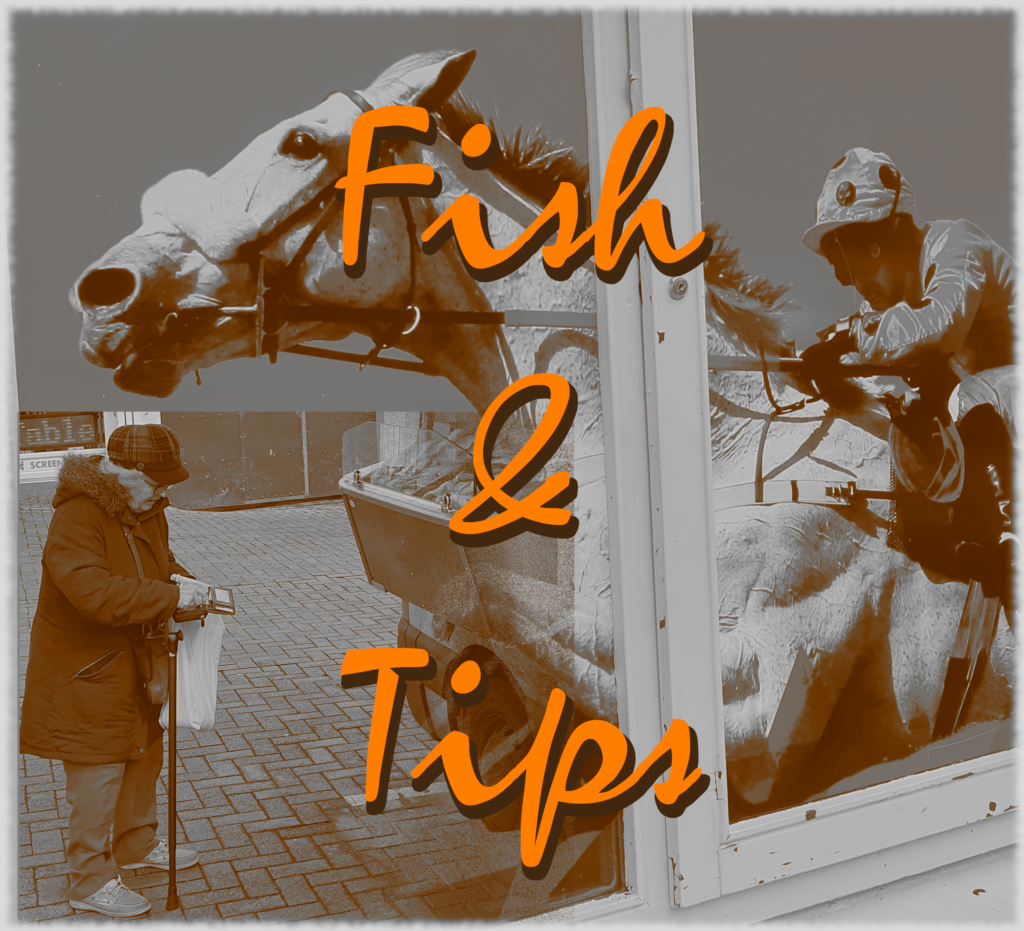
Jason is known far-and-wide (according to himself,) as the Fish & Tip man. Though, in reality, he should be known as the Fish & Banter Man because, as well as trucking in fresh fish from Wexford every Friday, he always has an endless supply of chat, cooking advice, and jokes at the ready for customers. For many, he is the market’s main attraction. And many of those would never be caught dead in a betting shop. Jason, you see, is a passionate horseman, and like all passionate people, he loves to spread the news.
His stall is our first stop every week. We may need bread, or jam, or honey, but not until we have secured our bet for the day. Even if there is a queue ahead of us, we get in line. My mother invariably rumbles through her bag to find her notebook well before we reach the counter. There may be the name of a book, here or there among its tiny pages, perhaps even a telephone number, but a quick flick through it would make you think it is the form page from a newspaper. There are times noted, venues recorded, and the most exotic of equine names carefully written down in my mother’s elegant hand. The odds are never noted, starting prices only come into play later. Many of these horses proved to be also rans, but the winning side of the ledger favors my mother. Ma has pen in hand and notebook at the ready by the time the man ahead of us has bought a lobster, filled a bag full of prawns and has decided between the salmon and the hake. Then it is our turn.
“I have one for you today,” Jason normally says to my mother, before turning to me and asking what fish we want. Once I have given him my order and he is fulfilling it, he talks to my mother, takes out his phone, calls out the name of a racecourse, the race time, and the horse’s name.
The people around us normally are intrigued by the events unfolding before them. Some see my mother and smile, thinking poor, wee, lost, old woman. Some frown, wondering what they’re missing out on. An old friend, who was behind my mother last week, asked her to place a tenner each way on the tip of the day. Sometimes, you can even see a person’s lips move as they try to remember the name of the horse, intending, no doubt, to check it out later.
The funny thing is that my mother is still on the winning side of the Ledger this year. But the horse from the week before last was not even placed. This may be the reason why Jason felt a little bit shy about offering my mother a tip on Friday morning. However, he was determined to do well by her, and asked her to text him later, he most certainly would have a winner today. I entered his telephone number into my mother’s phone, texted him using her name, asking him for her tip for the week. The horse won. It makes up for the winner we missed out on, on Good Friday. The tip was good, you understand, but the bookie was closed. Still, the fish was delicious.
Jason texted us the good news last Friday, confirming the win only minutes after the race was run. Now, that is some service. And the winnings more that covered the price of the hake, the monkfish and even the bag of crabmeat we bought.
When most people think writer, they imagine hands hovering over keyboards, they see eyes staring, unblinkingly, at a rapidly moving cursor. They visualise coffee stains on an Ikea desk, or nicotine-yellowed fingers pawing helplessly through notebooks for a forgotten phrase, or an idea in need of transcription. For those of you who have not sat there yourselves, staring at a blinking, stationary cursor, there may be romantic visions of high-backed chairs, behind opulent, antique desks which sit in expensively decorated offices. Others of you may conjure up a writer’s den which is a low-ceilinged, uncarpeted bedsit, with a miserable desk off to one side, and an unkempt bed pressed hard against an unpainted wall.
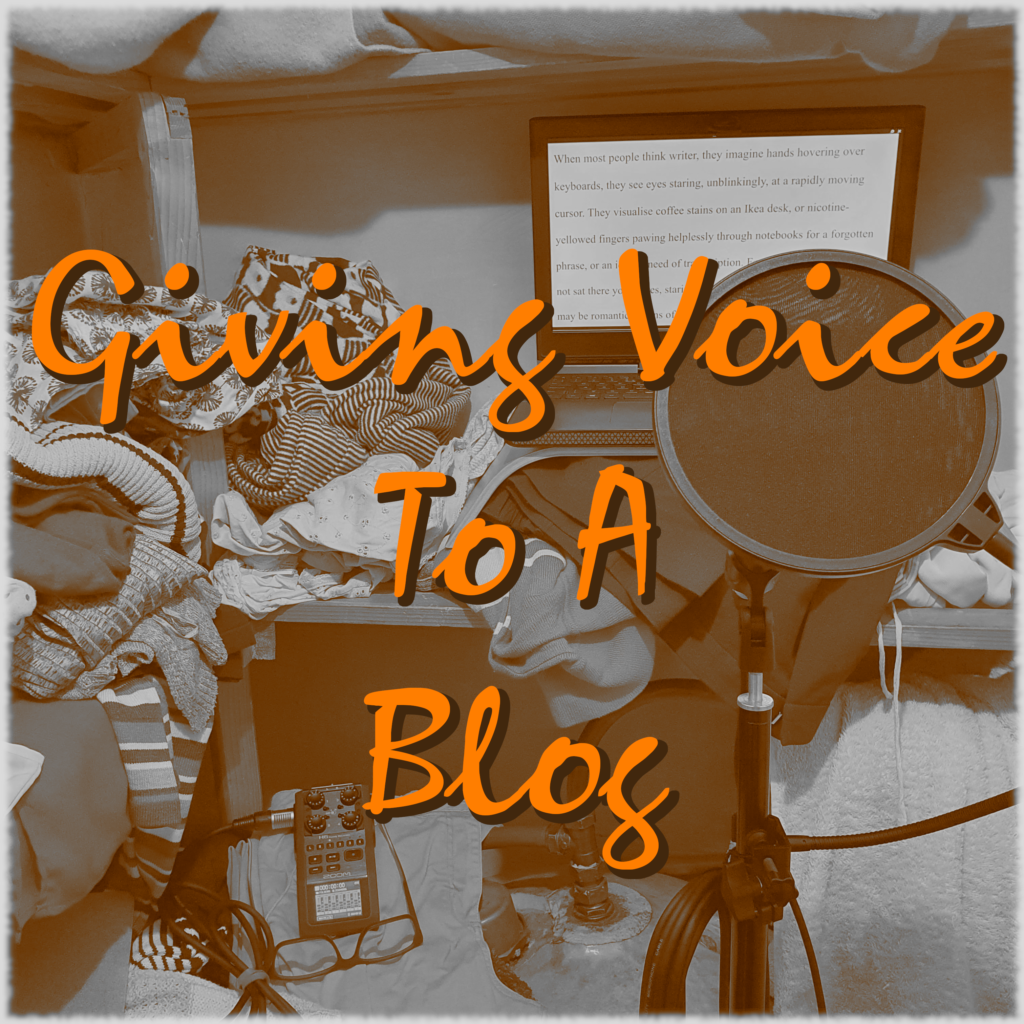
Few of you would imagine the writer as a bald, sixty-something crowded into an airing cupboard, reading his blog from a laptop which is balanced precariously on a mountain of freshly laundered underwear.
A microphone stands before him, mute and accusatory. It seems alive and takes the place of all the sarcastic teachers who ever berated him as a child for stammering over uninspired textbooks.
You may remember that feeling, the panic which spread through you as you counted-off heads and sentences in an effort to find the one you would have to read out loud to the inmates who make up the rest of your class. While you found your reading, other junior scholars opened mouths and stumbled through passages and your index finger turned white, bloodless as it ran back and forth under the sentence you were destined to share. At moments like this you muttered the words to yourself, silently incanting them, prayer-like, in your head, in the vain hope of memorising them. Finally, you were as ready as you anybody pumping toxic levels of adrenaline was ever going to be.
Everybody else’s readings had passed you by, the meaning of the text was lost to you, but you were prepared, or were you? Your name was called, your palms became hot puddles of sweat, and suddenly your tongue was tripping over words which were a deformed version of the incanted ones, a spell gone wrong. Your index finger flew backwards more often than forwards on the page, progress through your sentence was painfully slow, but you got to the end of it with minimal sarcastic shrapnel hitting you head-on. The full stop was reached, and you hung onto it like a drowning man might cling onto a life jacket after jumping from the Titanic, with little hope of long-term survival. Although there may have been icebergs to the left of you, icebergs to the right, you were alive, safe for now. That’s when your teacher invariably asked you to read the next sentence.
By the time I reached my teens, my phobia of reading out loud had reached its zenith. By now, I was fumbling my way through Latin, French and Irish texts, and no matter who the teacher was, or what the subject, everybody in the class was expected to contribute. The written word, itself, held no demons for me any longer. I spent many nights tucked up in bed with a good book, a reading lamp illuminating words which kept me awake into the early hours of the morning. However, once pressed to share the joy I normally took from this solitary practice, the old tongue-tied-ness regrouped. During English class, my contribution to the public reading of our prescribed novel was a stammering, incoherent, deconstruction of a brilliant text into its disjointed parts. Somehow a working engine seemed to be transformed into scrap metal as I read. These readings can best be thought of as my contribution to dystopian storytelling at its best. The emotional scars ran deep. By the time I left school I was sworn off ever reading in public again, yet here I am, a mountain of clean linen behind me, a microphone before me and a script challenging me to a duel.
I first hit the un-mute button for my video work. A silent how-to on making apple jelly, or recovering a lampshade, sort of defeats the purpose of empowering others to follow suite. So, I wrote a script and set to work. The results have been hearteningly well received. Apple jelly fans are a passionate lot, lampshade lovers, less so, but very much more appreciative, in a quiet sort of way.
This podcast came about because people I knew preferred to listen to, rather than to read blogs.
While writing was an obsessive-compulsive disorder in my case, reading them was something I was reluctant to do. There was little point. My bleatings would get lost in the wilderness that is cyber space as it competed with millions of other writers who vied for your attention. But others were adamant, which is why I am standing in a linen closet, talking to myself right now.
The reason I am here is that getting the sound from the writer’s lips to the listener’s ears is fraught with difficulties.
Some people believe that so long as they possess an I-Phone they hold the key to worldwide, podcast domination. They believe that the phone is a multi-media, Swiss army knife of sorts, capable of keeping you current on your twitter feeds, posting pictures on Instagram, or filming, and editing, award winning documentaries. Can there be any doubt that recording a podcast must be simplicity itself?
The answer is yes. Sound is a devious creature. Without proper acoustic dampening, a bedroom recording sounds like one made in the deepest, darkest cave ever discovered. It becomes an echo chamber where whatever you say reverberates for eternity, even if you use a proper microphone; one shielded from direct contact with the p sound, which left unguarded, hits the eardrum like an out of tune base drum.
Whenever I sit at my desk and type, the outside world makes itself heard. Birds spread the message that they ready to settle down with any mate eager enough to respond to their lusty warblings. The wind today is from the east, and every April shower that comes along announces itself by hammering against my window, making this room unsuitable for recording anything, other than a shopping list.
Anybody who has read my blog about my writer’s desk will remember that I am a guest in my mother’s home. She has the ultimate say on any changes which get done to her house. And she is a no-changes-to-my-house kind of a person. This is ok with me, but it means that improvisation is required, if I am to record anything which meets even the most basic audio standards.
This is why I record my podcasts in the hot press. It is the only room in the house without a window, which means that the winds can blow as hard as they like without rattling glass panes, and birds can have the most raucous of orgiastic feasts, and my mic shall remain deaf to their antics. The clothes, too, are useful, as the washed linens, piled high on shelves all around me, dampen reverb, and make this room the only echo free chamber the house has on offer.
It is a strange feeling, though, standing before a microphone, script before me, underwear piled up high all around me, to read my work into a microphone in the hope of capturing something of the spark which tickled my imagination and brought me, willingly, to my writer’s desk with an urge to share these thoughts.
What drives me to splutter into the microphone, I cannot say. It is not an easy process. There is the problem of breath control. Really, an actor is more suited to this job than an author. A writer may hear voices as he writes, but that does not mean he can read them back to you as they were imagined. There are the coughing fits too, hay fever in no friend to a man locked in a hot press with a manuscript and a microphone. And what will people make of my voice? Is my accent off-putting? Perhaps it speaks of white privilege. Is it too male? To deep? Too squeaky? Body image may cause all sorts of neurosis, but when you are stuck with a voice recorder, watching audio levels rise and fall with your voice, in a stuffy little room, you can get well past neurosis and enter the gates of total funk.
And if you supress that panic all the way to the end of the blog, the process is only half-way through. Now comes the edit. Your first opportunity to listen to messages from a linen closet. Only, now you get to see your voice as well as hear it. Waveforms appear before you and accuse you of whispering here, or shouting there. If you are like me, you cannot tell a lut from a decibel, so the screen you face is more like an art instillation than anything else. It seems deliberately obscure. But with the help of YouTube videos, you eventually have a file ready for podcast. Whether anybody will listen to your finished recording, is not really a question that bothers you. You have had your say. You have read every word of your blog without interruption, sarcasm, or laughter stopping you. You have given voice to the words on the page, sometimes, that is the only thing that matters.
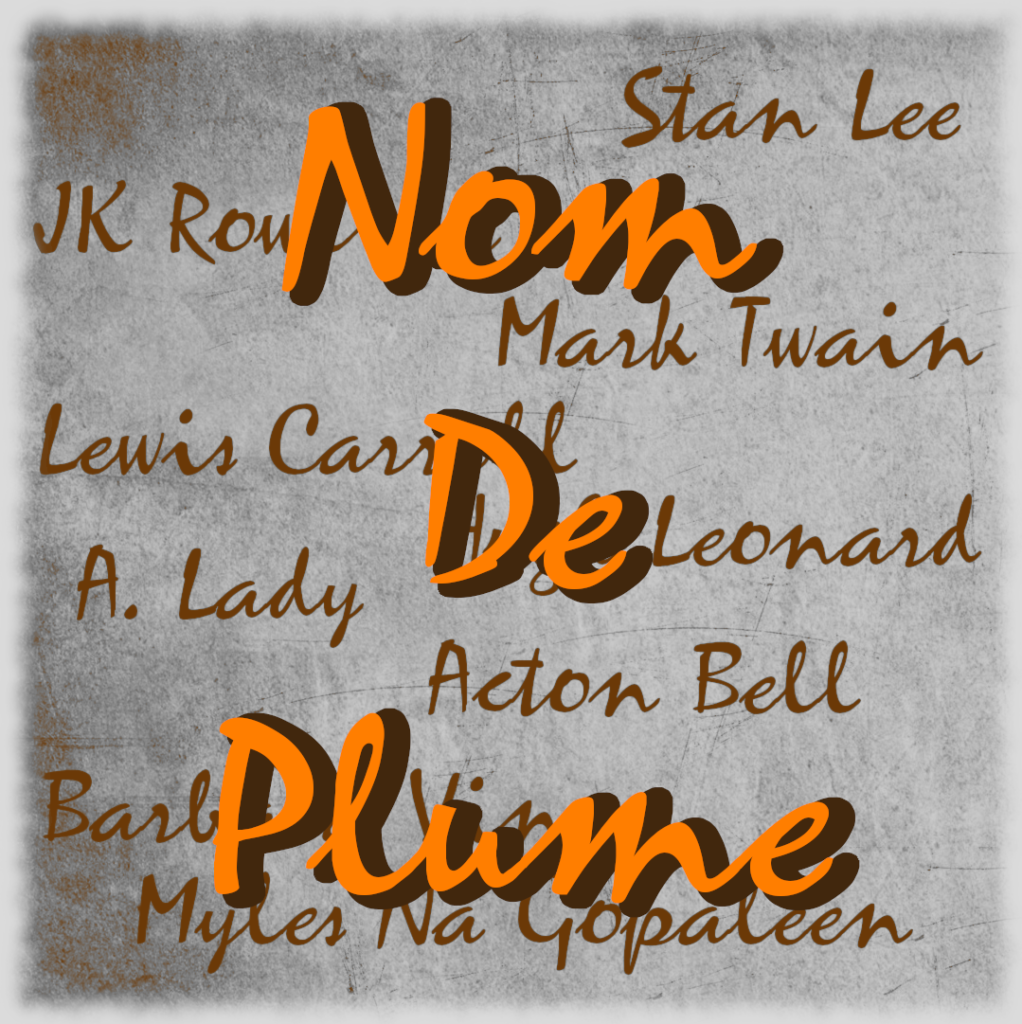
Why, you may well ask, would I even think of using a Nom de Plume? It is not like I am a civil servant who could get themselves, or their government, in trouble by expressing ideas which might be problematic for their political bosses. Hugh Leonard and Flann O’Brien were names chosen to protect the writers from becoming unemployed civil servants. Not that Flann was happy with only one pseudonym, he also wrote under the protective umbrella of Myles Na Gopaleen. One might argue that the name change, not only protected Flann, but also his family. He was a difficult man at the best of times to explain away. Imagine how a maiden aunt might have felt if she became aware of his strange, writing proclivities. Think of the strain she would have taken upon herself, the delicious guilt of being related, no matter how tentatively, to this peculiar genius. Imagine the almost teenage glee of confessing sins on his behalf, to the local parish priest, sins hidden in prose she could never bring herself to read, and which must be all the more suspect for that. After all, if you cannot, for fear of contamination, open one of his books, there must be terrible sins hidden inside. Oh, the shame of it!
His uncontrollable urge, one he indulged, to lock himself in a room and write some of the most extraordinary fiction ever written by an Irish man, would have been seen by many family members as eccentric at best, perverse at worst.
So, there are many a good reason for a Nom de Plume, at least there were, you might argue. There is no need for one now, in these liberal times, you might say, but are you sure of that? Think of the hordes of internet trolls simply waiting to shred to pieces writers they happen to take offence with. While they have every right to be as offended by an author’s work as their grandparents had, the writer should have as much right to her privacy as her grandmother had. Think of all those who had to have a flag of convenience to avoid looming troubles, or to get published at all.
You may not be aware of it, but many writers were continuously at war with the rest of their society. And in a way they still are. Many are on the frontline of the culture wars. These move with the times; today’s liberal is often seen as tomorrow’s conservative. As the times are always in flux, attitudes always changing, the winning side is never clear cut. Many writers are simply part of the clamouring classes as myopic as their peers. But there are always those who see clearly. They will never be the most popular, or the most widely read, because they will present as balanced a view as possible. They will mostly fail, but they will strive heroically first. Fighting in a headwind no one else can see, they should have a Nom de Guerre rather than a Nom de Plume.
Think of that age old tradition of giving newly recruited troops each a war name. Thomas the Brave sounds far better that Tom Smith 1072 and far more intimidating when shouted across the battlefield. Imagine you were christened Alfonse Patrick Mary Brown, where is the blood curdling inspiration in that? But perhaps Alfonse Patrick Mary is a strong lad, and a passingly good archer, why not call him Strong Bow? And as for Dan Murphy (whose sole indication of brain function is his continuous misinterpretation of the word forward to mean retreat?) What shall we call him, after handing him a mop and putting him on permanent latrine duty? Somehow, I suspect he would become Dysentery Dan and would be scarier to friends than foe. Every army has them, no matter what their true name is.
Who, you may wonder used a Nom de Plume in the past? So many, that I could write a doctorate paper on a tiny cross section of them and still leave room for hundreds of scholars to mine this seam of intellectual gold after me. Not that a dead writer has much to say of such small-minded pursuits.
Take Jane Austen, published as A Lady. She was not alone in being A Lady. Bookshop shelves of that era were creaking under the weight of A Lady’s works. Imagine the insult to Jane and all her fellow A Ladies of the time. Think of the biting satire she must have contemplated writing about the publishing industry she was forced to work in. There must have been a ‘Pride and Prejudice Among the Printing Presses of London,’ begging to be written by her.
As for the Bronte sisters. They were so harassed by the male dominance of the writing scene that they were forced to publish under the names of the three alleged brothers, Currer, Ellis, and Acton Bell.
Samuel Longhorne Clemens, was so weighed down by his name that he could not publish under it. The name is so whimsical and elitist that no one could imagine that it would hide a biting satirical voice, one that resonated with millions, but only after its owner hid behind the name, Mark Twain.
Stephen King also wrote under the name Richard Bachman. In his case he was not hiding the fact that his parents had gone mad at the baptismal font. He was disguising the fact that he was simply too prolific for his publisher to admit to. No writer, they assured him, could be taken seriously if they published more than one book a year. Eventually Richard Bachman died of ‘cancer of the pseudonym.’ What a way to go.
Stan Lee was a pseudonym that became Stanley Martin Lieber’s legal name after he became too successful as Stan Lee to deny his involvement with The Marvelverse he helped create.
There are many reasons for changing your name on the cover of a book. But the main one is about shelf appeal. How many people would buy into a children’s fantasy book by Anne Rice. Maybe, if she had form. But as a new writer… Better to add a couple of initials followed by an extra syllable or two. And thus, J K Rowling was hatched. She was also later published under the name Robert Galbraith, because the expectations of her loyal Harry Potter fans would have been shattered by real world fiction set in an adult world.
It is the real world which concerns me. How would my name look to the eyes of people interested in crime fiction. The readership is mainly female, and they have very fixed expectations about authors. While, in the past, women changed their names to appeal to a general readership, now more men are doing so. For instance, there is a very large, bearded gentleman who only recently stepped out from behind his Nom de Plume. He was a romance novelist who feared terrible sales figures if his readership learned of his sex. Most people however, simply use their initials as the flimsiest of disguises. If that gets past the prejudice of the reader to such an extent that they pick up your book, then it is worth considering.
The question remains, should I wear a public disguise, or not?
Jim Clarken is as good a name as I require in everyday life. But how would it look on a bookshelf, fighting for the attention of a browsing public? Would James look better? How about Seamus? Is the balance right? I could use the name James Thomas, my first two names, but that is sure to be in use by somebody else. Thomas Aquinas could be legitimately used too, don’t ask, it was a baptismal mistake. No one remembers this gluttonous philosopher now, it would raise no eyebrows if, hundreds of years after his death, he broke into the crime market. As for initials, ‘J.T. Clarken,’ has no balance to it. I hate to say it, but I might have to be myself.
According to my sisters, no Gemini should ever contemplate giving birth to a Pisces. Thankfully my mother ignored this advice, in the way she ignores most advice, not that her choices (many of which brought permanent frowns to the faces of the tut-tutting classes,) seem to have done her any real harm. As a result of such independent thinking, she failed to consult an astrologer before being so feckless as to conceive me. I am also fairly certain that she failed to consume folic acid as part of the baby having procedure. Folic acid was not in fashion back then. The harvesting of amniotic fluids would also have seemed barbarous science fiction to her generation, scans unnecessary and as to discovering the sex of the child before it was born, that would only have ruined the surprise. Remember, those were the times when naming a child before it was born was considered tempting fate.
So, she had a Pisces, poor thing, at least according to my sisters. Whether this is true sympathy for my mother, or some sort of accusation levelled against me, I cannot say. Suffice it to say, that according to them, it completely explains my mother’s relationship with me. What this is, is impossible to say, but according to my astrology hooked sisters, our relationship is fraught with confusion and misunderstanding. This may be so, but if it is, I explain it to myself as a generational gap, or personality differences. My sisters think otherwise. They tell me that we are merely actors in some Greek play; comedy, or tragedy they never say. Mostly, I ignore such talk, but sometimes I have cause to pause and wonder.
For instance, when my mother asked me to jump from an aeroplane, just what had she in mind? She had never, herself, expressed any desire to leap from a plane at five thousand feet and allow gravity do its worst. What was this about? Had her stars aligned her against me? Was the moon holding water? Was Neptune up to no good? Perhaps Mars was even redder than usual. Her request baffled me on so many levels.
My male role model, my father, was afraid of heights, enclosed spaces, being buried alive, and gardening (least it ruin his golf swing.) This may make him sound like a wuss, but he was no wuss, so long as his feet were firmly on low lying ground, and nobody was nailing him into a coffin while there was breath still left in his body.
However, he was generous with his neurosis, sharing them with anyone who would listen. Maybe because of this, I fancied that I too suffered from a fear of heights. Whatever the reason, when my mother went on a charity drive and asked me to jump from an aeroplane, for whatever cause she was supporting, I said yes. My theory being that, by facing my fears they would retreat to the side-lines and therefore be less of a nuisance.
It is all very well to sit on a barstool and indulge such a theory, but to turn up on a cold Spring morning as sheep are being herded from the runway tests one’s resolve. Seeing them ushered into a holding pen might have given me pause for thought but looking at the small aeroplane close to them was reassuring. Dowdy and humble sure, but it seemed airworthy. Just as this thought crossed my mind, a minibus pulled up beside it. Men got busy, jump leads were produced, an electrical umbilical cord was attached to the plane and my palms began to sweat, despite the cold. Still, I reasoned once the engine was started and up to speed… I shivered, gave up on reason and continued to the clubhouse. It is, after all, emotions, not reason, that drive people to greatness or their doom. My emotional investment was twofold, money had been raised for a good cause, backing down would have meant no money. There were also friends who had jumped before me. There would have been no end to the slagging if I turned and ran away now. I am sad to say I was driven by shame.
I would like to say that the reason I was feeling fragile as fifteen first-time jumpers huddled together in a cold shed, was the early hour, however that is not true. My confidence had been lowered by what I had seen outside. Remember, these were solo jumps. We were not going to be conjoined with an instructor. We were going to have to find our own way down, though gravity would lend a helping hand, as our instructor pointed out when he stood before us and said,
“This is an adventure sport; people die doing it. Anybody who wants to leave, do so now.”
Heads turned; frightened eyes scanned the room for people brave enough to leave. But we were all cowards, more willing to jump from a small aircraft, than to look tiny in our friends’ eyes.
We then had a twenty-minute lecture about the joys of being splattered on tarmac, of having our legs broken, what to do if our parachute failed to open, and how to open our emergency shoots, as we dropped like a stone, when our main chutes failed. Fifteen sets of ears listened, and some brains may have absorbed the information. However, having teaching experience, I would imagine that at least five of those present heard nothing above the, ‘What-the-hell-am-I-doing-here,’ voices screaming in their heads.
You may wonder why I was still willing to go through with the jump, aside from the shame of dropping out. The answer is that everyone I knew who parachuted from a plane had survived uninjured. In other words, the technology was proven. I also remembered an evening spent with a one-armed golfer as he reminisced about being in a parachute regiment during the second world war. His scariest jump, he told me, was from a balloon basket. It was a straight fall, as opposed to jumping from a plane at one hundred miles an hour. Which means that you are moving one hundred miles an hour sideways as gravity takes hold of you and begins to pull you down to earth. The balloon jump was even scarier, he believed, than a night-time leap into the darkness. Based on his opinions, I would be pumping less adrenaline than if I were jumping from a basket.
Eventually, after learning how not to break a leg when landing, how not to castrate myself with the parachute harness – by tightening the straps correctly – the instructor pulled me aside for the hand inspection. Hand might be over stating things, hook would be more accurate. He asked me to raise my hands to see if the hook was high enough to catch one of the toggles which steer the parachute. We agreed that the hook was up to the job, it was all systems go.
Lots were drawn, soon myself and the others of the long straw brigade were watching the first batch of jumpers huddle together in the aircraft. You could argue that it is better to get the ordeal over with quickly but be assured none of us lotto winners wanted to exchange places with any of the sardine-like creatures now squeezed into the plane. My heart practically bled for the jumper who would be first out of the aircraft, first to count to three, to wait for the chute to open and slow their descent.
Finally, the aircraft was fully loaded with scared, novice jumpers. Our instructor issued last minute orders and was about to join his students when confusion arose in the ranks. People spilled from the plane and a protesting; would-be parachutist crawled from the bowels of the aircraft. White-faced, he removed his helmet and handed it to the instructor, who immediately turned and gave it to me. Likewise, I was handed the main chute, along with the emergency one and, with no time to think, slipped into the harness and tightened up the straps.
There was no time to consider whether Saturn had gone retrograde in my chart, or if the stars had decided that, like a Final Destination victim, it was my time to die horribly for cheating Death some time before. There were quite a few moments to choose from. Whatever the reason, it was time to jump. Worst of all, using the ‘last-in-first-out’ rule, it seemed as though there was a big number one written on my back, I was going to be the first person out of the plane.
The aircraft would, no doubt, have been comfortable enough if it had passenger seats, or a door. Aside from the pilot, nobody got a seat, a lesson Ryan Air could learn from. As if confirmation were needed about the number on my back, I found myself sitting in the doorframe, half-in-half-out of the aircraft, the instructor, a lead weight on my feet keeping me from tumbling from the plane at least until we were airborne.
There were a minimum number of pre-flight checks where the passengers were concerned. There were no airhostesses prattling unintelligibly about storing your possessions in the overhead lockers. All I heard was the shout from the instructor, “Keep your feet off those pedals.” That’s when I saw the terrified jumper sitting beside the pilot. There is no way of knowing what size his feet were but, clad in walking boots, they seemed enormous and perilously close to the pedals before him.
The engine roared into life. The plane rolled forward and gathered speed. I watched sheep droppings fly into the air as the plane raced towards a hedge at the end of the field. My imagination was dwelling on fireballs as my mind flew into nightmare mode. All I could think of, as my shoulder dug into the doorframe, were size 12 boots pawing at the controls, keeping us on the ground just a second too long. Oddly enough, I now thought that it would be safer to jump from the plane at five thousand feet, than to stay on board for the landing.
There are things no novice jumper is ever prepared for as they take that leap of faith. The silence for one. Then the view. When you look down everything is flat. Two dimensional. Disorienting. You feel lost. You find yourself asking, where did that big X you were told to aim for get to? Then you find it. The chances of you landing near it are slim, but there is a feeling of triumph at having found it. There is no doubt in your mind that you won’t land in the same field as the big white letter which marks the spot. The odds are in your favour. It is a big field after all, but with the wind at your back…
Then you spot the twenty-thousand-volt power lines beneath you. It is time to panic. You frantically pull a toggle and, instead of turning in a different direction, you become a human spinning top. So, you ease off on the toggle and drift away from the cables only to find yourself about to straddle a barbed wire fence.
Now, if a harness can damage you digging into your crotch, what can a barbed wire fence do to you? It is far tougher than nylon after all and sharper too. This is a rough translation of the OMG thoughts which ran through my head seconds after my twenty-thousand-volt power line incident. Unasked for scenes flashed behind my eyes.
It seemed that an accident and emergency ward featured in my imminent future. Young nurses swarmed into my imagination, gathered around my trolley, and eyed up the damage. They were wide-eyed, their heads craning forward to better inspect my injuries; their eyes both horrified and fascinated in equal measure. I could have spent all day in my imagination, watching them watching me, getting high on hospital smells, but thankfully my parachute training kicked in.
By now I was an old hand with the toggles. Not that I understood them, but they gave me an illusion of control. I pulled and prayed, missed the fence by a few yards as I landed safely. Who cared that this was the wrong field? I was finally down, my legs appeared to work, even if they were weak. It was time to stand up, look around, assess where I was and make my way back to the adjoining field. Somewhere in the back of my mind the there was only one question that needed answering, were the pubs open yet?
I arrived home a little later than expected, and right on the legal drink/driving limit – they were much more generous back then. This is ok, Pisces are known to like their drink. And as for my Gemini mother, she was her usual smiling self as she greeted me at the doorway before waving goodbye and heading into the night. I was home safely, she had places to be, the world was back to normal.
It was only later that my sisters told me that my mother had rung them, wondering where I had gotten to. The sun had gone down, after all, and only the foolhardiest would parachute in the dark. It was reassuring to learn, that no matter how the stars aligned, my mother did wonder at the folly of throwing her Pisces son from a plane.
I gleaned one lesson from this ordeal. The next time somebody asks me to jump, I will ask ‘how high?’ before agreeing. As for my phobias. I still have a problem with heights. But that’s probably just vertigo.
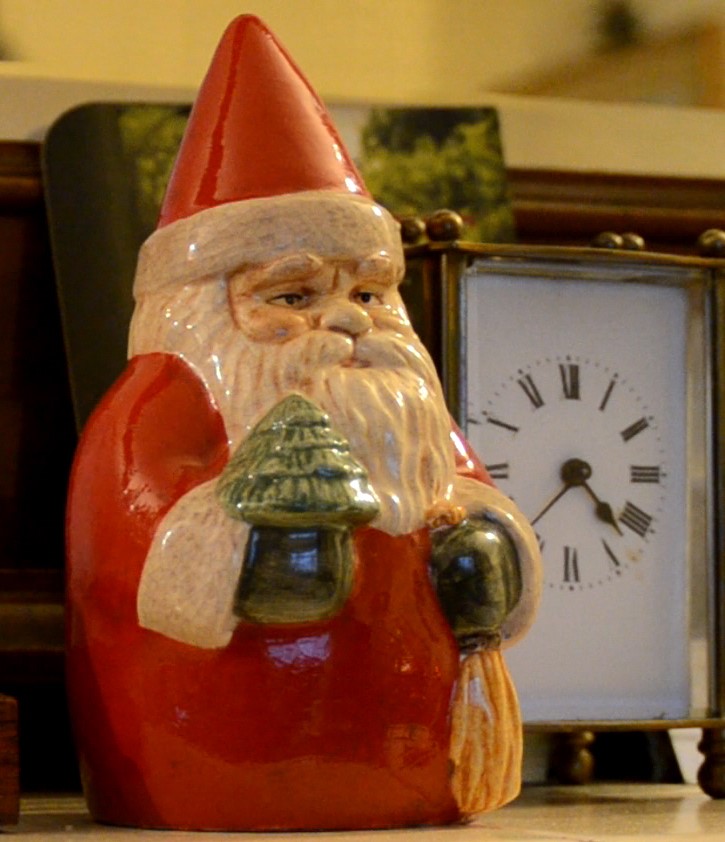
This is the season of Ba-humbuginess, of misanthropes everywhere to, if not stand together, at least unite against the group hysteria which forces fake joy onto a rather uncaring world. Thank you, Mr Dickens, for giving us Scrooge, the perfect misanthrope. If only you had left him alone, allowed him wallow in his pain, but no, you had to go and change him into a broken figure, sacrificed on the altar of sentimental intentions. By the end of the book, you have turned the season weird, adding too much tinsel, and a saccharine sweetness, which is too poisonous for many of us to swallow. For this part of the blog, I shall stand at Scrooge’s side and empathise with his pain. This is Christmas past. I am your ghostly guide.
Think of the scariest things you can imagine; a Marmite sandwich, a latte made on soya milk, being stuck on a crumbling cliff edge five-hundred feet up, or worse still, being trapped in an elevator with an Instagram celebrity. Life is terrifying, at winter, scarier yet. The long, dark frozen nights mess with our heads in a way summer never does. Aside from insect bites and sunburn, there are very few threats during the hottest days of the year, other than an unwashed salad, devoured in some foreign land. But in winter; insects hibernate – and are now, no doubt, dreaming of sweet tasting, human blood to be lapped up in the springtime. Salad-tummy is a nightmare belonging to hotter times. Looked at logically, therefore, winter should be a time of ease, of hot chocolates and mulled wines. Except, humans have a way of distrusting the cosiest of here-and-nows. Thus Christmas was born.
This season, you might think, was invented by a show-off who used the biggest lightshow in town to assert dominance, or by an advertising executive with shares in a toy company.
Not so, Christmas started life as the old Roman festival of Saturnalia, invented for a different deity than the one celebrated now. The Romans marked the darkest time of year by giving gifts, cheap, fun, jokey, token presents. This was a seriously fun festival, the gifts reflected this being crude, rude and in keeping with a season of drinking, gambling and debauchery. For one day of the year, slave owners served at the table of their slaves. I cannot think of a modern equivalent, or imagine that Donald Trump dons a waiter’s apron on Christmas day and doles out hundreds of burgers and Cokes to his staff, as they play tricks on him.
There were also religious sacrifices made in Roman times, but not human. You would have to hang out with the Druids and Celts for that. There is ample evidence of this. Simply ask an archaeologist about our bog bodies and our habit of sacrificing our kings on an annual basis, if you need confirmation. Judging by their choice of sacrifices, you can tell that women dominated religion in Ireland at the time and were our first priests, wielders of sharp blades, and good with a restraining knot. As the inventors of agriculture and religion they certainly held a strong position in Irish society. One look at the Brehon laws proves just how enlightened we were in many ways. Though human sacrifice might seem to contradict this theory. But if a little light bloodshed is your thing, what better time to indulge it, than in the darkest days of winter? What an appropriate time to tie somebody to a stone altar and, using a sharp blade, a strong rope, or a blunt instrument, offer them up to a Sun god who might never return if not properly appeased.
At a time when there were no James Bond re-runs on tv, I’m sure these sacrifices would have drawn a large, local audience. Knowing that you were not this year’s chosen one would have been such a relief that you could relax and enjoy the religious experience. And there would have been no cover charge to witness such a Tarintino like bloodbath, one without any irony attached. The bonus, of course, was that the sacrifice would play to the Sun’s better-self, make him do a handbrake turn in the heavens, quickly returning in our direction, bringing light back into the world with him.
How did we get from that essential, deadly festival to what we have today, a sentimental, candyfloss occasion which is both emotionally and financially bankrupting? Where did we lose sight of the infant being celebrated? How did his message get so lost in translation? Does it really matter? He is innocent of any crimes committed in his name and powerless over those who usurped his message. Which is why we are left with a hollow, empty festival where the office Christmas party is about as much fun as root-canal without an anaesthetic, more torture than fun.
Cultural cross pollination at its best.
I can imagine a modern Scrooge, a penny-pinching, union hating, Brexit voter. As such, it is fair to assume he suffered as a child. An iron rod ruled his house, and a rugby ball would have featured prominently in his childhood, either because he was, or was not, allowed to play. This person suffers from PTS and I can imagine that one of the greatest triggers for this would be the bombardment of Christmas tv advertisements from November onwards. One hates to think of his childhood memories, to investigate his pain. Parents tend to be the source of our greatest neurosis. Listening to a four-year-old being interviewed about the non-existence of Santa recently, made me want to kill the parents. They may have prevented later pain and disappointment, but in doing so, they have killed the magic of childhood and turned their child into a target for bullying in the playground. Shame on you.
My own memories are vague, but aside from chimney fires, power outages, having to cook our turkey in my granny’s house and a sudden death in the family, the day was very much life as usual, only you could not go out to play with your friends, as they too were hostages to their families for the day. Overall, I was rather confused by the Santa business and it took a while to get the hang of letter writing, followed by a long wait. Then the day would finally arrive, and the present was never quite right-enough to send me into raptures and never quite wrong-enough to disappoint. My ideas were somehow very fixed in my head and got lost in translation in the letter to Santa. And then it happened, that final failure by the man in red. I wrote a letter to himself. Looking back now I can understand how he failed to make sense of my scrawl, but back then, as I posted the letter, I believed. Anybody who knew me as a child will tell you that I spent most of my time out of the house, with friends, playing seasonally adjusted games. This may account for how I slipped the letter into the post box without my parents having had a chance to proofread it first. Imagine their consternation when their son refused to tell them what he had asked for from the fat man. I cannot remember the probing itself. However, I have been told that the interrogations were fierce, but stopped short of torture. It was a close call, so high was the level of frustration caused. You see, I was certain that Santa knew, and it seemed bad form to share what he knew with my parents. You can imagine the result. I did not get the requested gun and holster. There was a lovely present under the tree, a present that, under any other circumstances, would have made me happy for months, but Santa had broken the faith. The seeds of doubt were sown. Christmas and disappointment became linked together in my mind and it would take me some time to decouple them. Since then, I’ve witnessed the same confusion repeatedly and listened to many adults whose hearts were broken under a Christmas tree, on the 25th of December, years ago.
I remember watching my niece, one year, discover a doll’s pram beside rather than under the tree. She was hardly four years old, and to see the excitement give way to confusion was a revelation. My theory that children are non-sentient were challenged when she said, “It’s not lilac.” She was correct. What can I say, it was blue. Blue is not lilac, ask a three-year-old if you doubt me. Parents! Oddly enough, like all of us, she quickly got over her disappointment. Soon, she loaded up her pram with dolls and took them out for a walk. I guess she was learning the lesson that dreams never quite match expectations. Just because life is one giant compromise does not mean that it cannot be fun. It’s a good lesson, even if it’s not supposed to be in Santa’s brief. The sad thing is that too many people never learned from their experiences and the ghosts-of-disappointments-past haunt them every year from October 31st to January the 6th. For them, this must be the scariest season of the year, the season of disappointment.
I think that the ghosts from the past can disappear themselves as we wander into Christmas present. A word of advice to the Scrooges of this world, low-cost airlines were invented specifically to save you from past traumas and those nagging doubts, that perhaps, you could enjoy the season if only… Do not listen to them, a beach in the Far East awaits.
For the rest of you, let’s examine Scrooge’s opposite number, the Christmas lover, the person who can never get enough of George Michael singing about last Christmas, or see ‘It’s A Wonderful Life,’ once too often. For these people Christmas is the focal point of the year. They may be few in number, just as there are very few proper Scrooges in the real world, but I do not dismiss them because of that. There are far more than you might imagine. Be warned, Mr Politician Man, their votes could decide a tight election.
This cohort may be marginally insane, their imaginations fuelled by sentimentality and adrenaline, their optics very much their own. They are the guardians of the season, Marvel Super- Christmas-heroes, bound to the sacred task of making Christmas happen in their household. It is as though they lived in a bygone age and their nearest and dearest’s life was at stake come the full moon at the Winter’s solstice. These people trudge through eleven months of the year, but in December…
For them, there can never be enough fake snow blowing across their lawns, robotic Santas scaling their roofs, elves imprisoned in plastic workshops, or coloured lights causing light pollution in their neighbourhood. In the way Elvis fans are attracted by white, glittering suites, these people become hysterical at the thought of heaped presents scattered under a tinsel covered tree. For them, there is no disappointment when the season has passed. Christmas lovers are like runners huddled and exhausted at the finishing line of the Dublin marathon discussing next year’s run, on the 26th December our heroes can already be heard thinking out loud about next year. January is next year’s starting line. The 25th of December may be a long time off for most people, but like a farmer, weary from the harvest, their minds are already tilling the soil, sowing the seeds of future festivities. This is why, they willingly sign up in the first weeks of the year, for next year’s Christmas catalogue. This is why, they start to pay off, one week at a time, for a turkey that has not yet been hatched. For these people, Christmas does not come as a surprise, catching them off guard, as it seems to so many people. They understand that they have 364 days to recover from this year’s case of indigestion, before facing into next year’s. And you can be sure that a box of indigestion tablets will be one of the products ordered from next year’s catalogue.
The proportion of real Scrooges, or manic Christmas lovers, in the population is low. The majority of us live somewhere between both camps. For us, Christmas is an ordeal to be gone through, less painful than a dentist visit, less rewarding than a scratch card win. Most of us cope well enough. But many of us flounder, as we do with so many things in life. We muddle through, but it is a serious bit of muddling. Others have more serious issues yet. They are almost destroyed by the season. Here’s what seems to happen to them.
The first mainstream hints that Christmas is around the corner occur about October the 31st when the first seasonally maladjusted tv advertisements air. They hear the warnings but fail to heed them, preferring to swear and scream at the flat screen tv, “It’s only Halloween!” than to heed the warnings. After a month screaming at the tv about the odds of snow falling at Dublin airport on Christmas day this year, they are distracted by the Black Friday sales. Here is a chance to get some early shopping in. However, they know that Black Friday is a con and loudly tell anyone who will listen what a rip-off it is. But no one listens, not even those on adjoining bar stools, who always seem to know-a-man-who-knows-a-man-who got a brand-new Rolex for a tenner. The real thing, the genuine article, you are assured.
The 8th of December passes (traditionally the day country people flocked to Dublin and did the Christmas shopping.) But these people are still ranting about Black Friday, only now they are alone, others have picked up on the hints and are making lists. From now on, the great muddlers are slowly transformed into zombies. Their eyes glaze over, they are hypnotized by the tragedy coming down the tracks at them. If only they could move to avoid it, but they can’t. They are doomed but fail to realize that yet.
Christmas denier dragged into the spirit of things.
The Christmas time bomb is ticking in the background, more loudly, but at the same inevitable rate. Every day an advent calendar door is opened, every morning a sweet eaten. The empty squares are a grim, visual reminder that time is running out. But the world is full to overflowing with visual reminders. The radio adds audio hints too, playing a plethora of songs that feature reindeer, but they are immune, deaf to the clamouring call to get organized. Then suddenly, their zombie cataracts are lasered off and they can see clearly. It is the 23rd or 24th and there is work to be done.
They need a space to think clearly, so retire to a pub to make the all-important shopping list. Ok, it is not so much a list of presents to buy, as it is of people they must get something for, but this is still progress.
If you identify with this behaviour, you have plenty of company. Just look around yourself on the 24th as you pop into and out of stores, as you slowly ride up and down escalators, packed with excited kids and exhausted shoppers. Check out the eyes. The kids’ swivel in their heads as though they have mainlined on sugar and promises. There are the tired eyes too, of those who have done all the major work and are doing that last chore, the Brussel sprouts run. In other words, they are secretly patting themselves on the back while gloating at those still in the middle of a shopping frenzy: you.
Imagine yourself in the zombie’s place. Your eyes are now more like those of a panicked horse than an excited child. It is difficult to focus. But at least you have a list, true it comprises of names, not things. Soap, socks, and chocolate may be the saving of you yet. Maybe not. Surprisingly, well before the shops have closed you sit once again on a bar stool, a clutch of shopping bags gathered around your ankles. Wrapping paper protrudes from one, Christmas songs play in the background, friends wish each other well and the man on the stool beside you wonders it the butcher is still open. You smile, feeling like you’ve won the lotto. Your race is run for this year. You have presents for everyone. There may be grumbling, but you have kept the receipts. The man on the seat beside you gulps down the last of his drink and disappears into the night.
We’ve all seen people like him before, fuelled by alcohol and fear, rushing from pubs into the nearest shops with a twenty-minute window to set Christmas to rights. The results can be a little disconcerting. To watch a man, on bended knees, wrapping inappropriate presents in yesterday’s newspaper, as the final moments of the 24th tick away, is sobering. As for the man who limped home in the early hours of the 25th lugging a Christmas tree in one hand and holding a (still warm) turkey in the other, he found a decorated tree in the hall and practically sobered up there and then. Not completely, but the miracle which had unfolded in his absence made him pause and think, but not hard enough to reform.
If you identify with this man, then you are already prepared for the disappointment which follows. Not only that, but you share this overwhelming feeling of helpless despair with anybody unfortunate enough to wind up sitting beside you for Christmas dinner. Like a character from Groundhog Day, you never learn, and seem destined to replay this scene next year, and the year after that, and…
A friend of mine has a theory that Christmas is sent teach children how to cope with disappointment. She may be right, she may be wrong, her insight was the inspiration for a screenplay I wrote. But how much disappointment must a child go through for the adult child to perpetuate the failure of Christmases past? How much pain are the Scrooges of this world really carrying? I think they carry enough to exempt them from having to comply with somebody else’s notion of how to celebrate the season.
Remember to bring your suntan lotion with you Scrooge. And avoid the salads.
But I shall not be running away. I’m brave enough to face it full on. Anyway, there is no rule that says Christmas must be hell on earth. Watch children play with their presents if you doubt me. And as they play, I shall dream of good food and contemplate organising a collection of black socks large enough to last a lifetime.
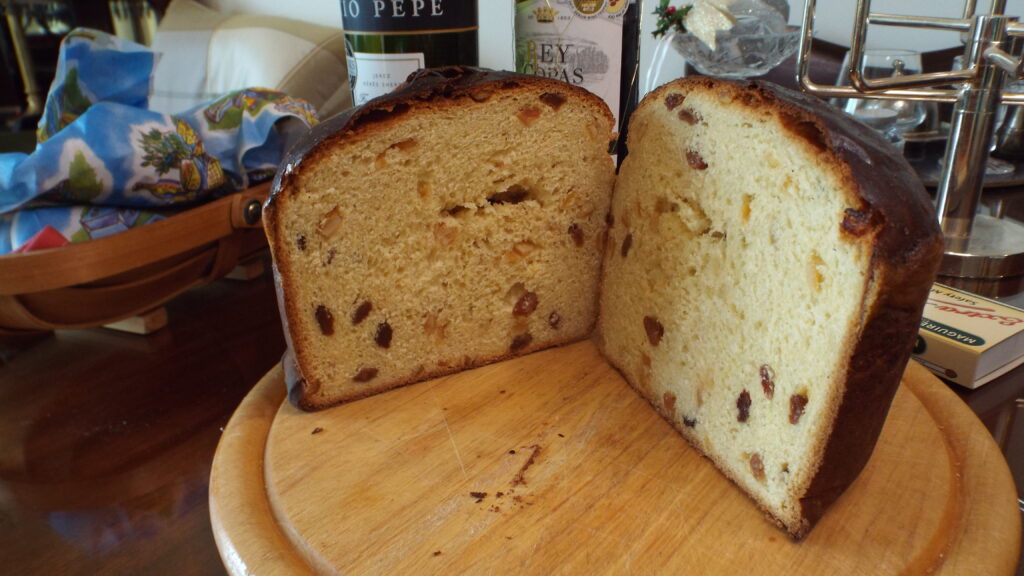
My Solstice cake 2022, baked to mark the handbrake turn in the heavens that brings back the light. Click image to see how it is baked.
A boxer from the nineteen fifties once famously said after losing a fight, “I should’a stood in bed.” All of us know this feeling, all of us have had days where, by the end of it, we wish that we had cancelled all appointments, disconnected the doorbell, turned off all wakeup alarms, curled into the foetal position, under the sheets, and let the day pass us by. Days like that often begin well enough, with you springing out of bed, haring down the stairs and feasting on a cooked breakfast. It is as though the weather forecast is for a bright, sunshiny day; only somebody forgets to mention the scattering of tornadoes on the horizon.
However, this was not one of those days. The clouds of doom had already gathered around me, even as the alarm clock sounded.
I felt like a Duracell Bunny that had run a marathon, all my battery juices were used up. The only thought that got me out of bed was that to arrive in the kitchen after my mother would be a mistake. Like most older people, routine plays a major part in her life. Kettles must be boiled as cod-liver-oil is drunk, cough bottles administered before inhalers are breathed-in and the tablets sorted through. Nobody wants to be in the kitchen queue behind my mother, at least not before coffee runs through their veins. And so, I rushed down the stairs ahead of her, organised coffee and sat down with a slice of brown bread to consider my position. It seemed terminal to me; by any objective measure, whatever ailed me, would prove fatal.
Being a man, stoic and all that, I decided to finish breakfast before writing up my last will and testament, lying down, crossing my hands over my chest and allowing my spirit to depart uninterrupted. I had a second cup of coffee and worked out the logistics of my death, (the where being uppermost.) Should my corpse be discovered on the living room sofa, or on my bed? Were the sheets clean enough to die on? Or should they be changed first? Which would leave the best impression on the undertaker? For some reason, consideration of my mother’s reaction to my sudden demise failed to register. I scarcely noticed her arrival at the breakfast, my mind being busy working through a selection of handle choices to compliment a budget coffin.
Hobbies change depending on our age. This thought occurred to me when my elderly mother joined me and gave me her itinerary for the day. The list ran something like this: bloods to be drawn at ten thirty, harass library staff for a political tell-all about Boris Johnson after eleven, find a coffee companion before lunch, see doctor after lunch.
Doctors and nurses play a large part in the social life of the elderly; competition is fierce. Where women gain social status in their youth by comparing caesarean scars, they rely on larger scars in later life. Having only one hip replacement is the equivalent of losing your virginity, it hardly shows any real interest in life, or men, or sex, or anything at all.
“You have to exercise,” my mother regularly advises a neighbour whose progress after her first hip replacement fails to impress my mother. “I was back driving six weeks after mine. Six weeks. Use it or lose it, as they say.”
In a quick counterattack our neighbour proves her body more decrepit that my mother’s by stating, “They want me to have one of those… Those…” words fail her, and she squirms in her chair until she finds a way to continue. “Those pro… Things with the camera.” She pauses, eyebrows quizzically high, how can she say what she can’t even contemplate; polite society would never allow such scandalous talk. With some sketchy hand gestures, she leans forward and slowly continues. “Up… Your…”
“Colonoscopy,” my mother is a fan of the colonoscopy, there is a lot of social credibility to be gained having coffee with friends while comparing and contrasting the effects of taking ‘that stuff’ the night before having the procedure. “There is nothing to worry about,” my mother reassures her before bragging, “Had it done dozens of times, myself.”
“They are not sticking anything into me,” protests our neighbour, “I had three feet of my bowel removed, there is nowhere for the camera to go.”
What a boast! Almost as good as having both hips and knees done, with the hint of a shoulder operation on the horizon.
“That’s nothing,” my mother splutters, “You have thirty-three feet of gut remaining.”
She resisted telling her how many full-grown pythons that might be. Pythons were last week’s bowel measurement yard stick.
Today, my mother had less-reptilian things on her mind and was not in open competition with any of her old friends. She was only having bloods done and a quick review of her meds later in the day. Move along, nothing to brag about here.
When she went to see the vampire nurse, I took a covid test and plumped up the cushions on the sofa, my deathbed would at least be comfortable. What can I say, I’m a man, we worry.
The test was negative, not even the hint of a line. And that after putting a long stick up my nose, against my better instincts. No sensible medical practitioner would ever recommend such a course of action. But the test hailed from China, which is why the instructions suggested a conspiracy to have all westerners self-lobotomise. A far more convincing conspiracy theory, you must admit, than to imagine that the US taxman is arming up, and planning to murder tax defaulters in Iowa. Oddly enough, I did not question the test results, just the method of getting them. The human mind is a strange place to hang out.
Feeling more wretched as the day dragged on, I stayed as far away from my mother as I could by hiding in my office. False readings are known, and us men are sensitive about such things. I was not taking any chance of infecting another person. It was a shock, therefore, when the door to my office burst open and my mother entered, demanding that I take her to A&E.
The question why, resulted in a terse, ‘Doctor’s orders,’ by way of reply. No amount of direct questioning, or around-the-bush probing, resulted in any further explanation as to why my mother was being sent to A&E.
There followed a drive to the hospital, windows open, masks on; maybe I did doubt the test results a little after all. Once there I did what everyone else does, I parked on two yellow lines, behind a deserted taxi, and unloaded my mother. There was doubt in my mind about entering A&E while in a twilight zone between covid states. I dithered for about 30 seconds too long on the yellow lines; car to the left of me, mother to the right. This was all the time it took for my mother to escape. “I’ll call you when they’re done,” she said over her shoulder, before disappearing behind a temporary prefab. If only my mind, or body, had been working, but they were not…
I heard nothing from my mother until I received instructions to put a bottle of white wine into the fridge at about six o’clock. It took a million questions to discover that there was a drip attached to her arm, though she had no idea why. Then she was gone. For once, the Chase went unwatched. I packed a suitcase with nightwear and reading material – just in case – and tested negative once more.
Then the phone calls started. How’s Ma? What’s wrong with her? What did the doctors say? Has she been admitted? When is she getting out? ‘Ask her yourself,’ I told my sisters, only to be told, ‘We have.’
The strangest communication came at ten o’clock when mid-call my mother captured a passing nurse and pressed her for an update.
“Am I being moved to the hospital, proper?” my mother asked.
“You are in the hospital,” replied the nurse. “This is Portlaoise hospital. You’re in the hospital. Don’t you worry. Why don’t you sit down here?” Having dismissed my mother as demented, she left her to her own devices. In her own way the nurse muddied the plot, rather than clarified it.
The witching hour approached and passed without news. Then, five minutes after midnight the call arrived, the Jim taxi was required, so I hit the road.
It seems to me that hospitals are designed to be impenetrable by anybody except maze runners. Despite this, there were parking spaces in the set down area of the A&E. I abandoned my car, leaving the parking lights on to indicate my intention of leaving immediately, and headed into the surreal world that is the emergency department. Patients were half-glimpsed through windows, ambulance doors were ajar, voices whispered reassurance on the night air. A young man walked past me heading up the ramp to freedom as I was drawn deeper into the bowels of the earth. Thankfully, my mother appeared before I reached the doors to A&E, accompanied by a male nurse. That’s when we heard the crash. I looked over my shoulder and realised that the sound could have come from only one place.
I indicated to the nurse, whose head was facing in towards the set down area, that he’d find me there. A short sprint later and I found myself at the top of the ramp staring at two young men who stood beside a taxi. Of all the warning plates to be seen on cars, (L plates, N plates, or taxi plates,) the taxi plates are the ones that make the driver in me shudder. They are the reddest of warning signs. The pull off the road, signs. Lunatic at large, they seem to shout. And looking at the crash site, it occurred to me that the level of evil genius required to hit my car was astounding. There had been three car lengths between us when I pulled into the set-down area and yet the driver had managed to cover that distance at speed, in reverse, and used my car to stop his progress down the ramp, straight to the doors of A&E. A closer inspection showed that my bumper was battered but unbowed. My mother appeared by my side, ready for battle. She looked from the battered bumper to the two young men who faced us and managed to get only in a few argumentative words before I convinced her to sit into the car and allow me to handle the situation.
The young men who faced me as the church bell rang one AM were obviously immigrants. Goofy and contrite they reminded me of the Irish of my generation, when we first landed in England, Europe, or the USA. Looking at the crash site, it was practically impossible not to smile at the bloody-minded stupidity it had taken to hit my car. Anger and amusement vied for dominance, but anger had no chance here. Details were exchanged and they drove into the night with a promise to phone me the next day. I no more believed that they would phone, as I buckled up, than I believed that a hair-fairy would reseed my bald scalp during the night.
But phone they did, with offers to fix the car if necessary. Smiling, I hung up and looked at the positive line on the test kit. I still believe that there is only one person who could have given me covid. But who will ever believe that some ninety-year-olds have a busier social life than their sons? Still, despite all the positives, there was no sign that a hair-fairy had visited in the middle of my night’s REM cycle.
The harvest is in, the days are getting colder, the nights shorter and clock hands roll back one hour. Is it any wonder that we begin to speculate on the dark side. It seems to be part of the human condition, to ponder darkness when all is light. Afterall, the larders are full, the rooves waterproof, yards tidy, and yet our minds are uneasy. It is a time to rest, but instead we contemplate death and terrify ourselves with stories of sinister ghouls, ghosts, and creatures from the underworld. Maybe these tall tales are the equivalent to an emotional roller-coaster, cheap thrills for people not yet ready to face the harsh realities of the Winter neigh upon us. Or maybe it is something more, the primal need to imagine the darkest pathways of our minds. Maybe we are investigating ourselves when checking the porous boundaries between good and evil, wondering how firmly we believe what we think we believe, and what it would take to turn us from half-way civilized to barking mad barbarians. (Sorry to those who are offended by the word, I realize that your beard-sprouting tribe is merely a fashion victim tribe, not an empire smashing one.)
Sifting through our folklore, one can only wonder at the almost limitless boundaries of our Celtic ancestors and ask which mushrooms they were taking when inventing the Pooka, a shape shifting figure of a sinister nature. But then, even our fairies are sinister. My grand mother would never say that a baby was beautiful, just in case the fairies were listening. As they could not have children of their own, they resorted to stealing them. The Red man, a Leprechaun on steroids, kidnapped people late at night and carried them off to his secret hiding place in a red sack. He then beat them until the sun was ready to rise, when he released his prey with no memory of what had happened to them. There are others, many others, but all come with a warning, stay away from the netherworld, nothing good ever comes from there.
Knowing this, as Halloween approached, our ancestors recognised the danger of this night, when spirits roamed the earth with malice on their minds. They took precautions, lit lanterns in windows and wore disguises to trick the spirits as they walked among us. They were not stupid men and women, our ancestors, they knew evil abounded and took precautions against it. So, be warned, dress yourselves up as an evil spirit, least you are recognised as human and become the host for a lost soul in need of a warm body.
There is ample proof that Halloween originated in Ireland before emigrating to the US with the starving hordes of the nineteenth century. There, it and the Irish thrived, before the celebrations were returned to us as an American festival. But sadly, their festival is only a cartoon version of our own, a children’s festival, a ‘Halloween Light,’ a ‘No-Cal,’ emotional event with nothing to engage the imaginings of a slightly depressive Irish person, who has only a candle for light, a turf fire for heat and a glass of poitin for spiritual guidance. God knows what answers will come to such a person if left to their own devices. Better for them to join a crowd, to play music on the fiddle maybe, bang heels in time to a dance tune and listen to soulful, traditional melodies sung late into the night. If nothing else the noise may keep the spirits away for another year and keep all here, in middle earth, safe until they return once more.
It will not come as a surprise to anybody who knows me, that my main interest in Halloween is food related. The barmbrack caught my imagination early, as it seemed to be more of a storage unit than a foodstuff. As a child, I loved fruitcake and was puzzled by a cake that one had to sift through before eating. Nowadays, the tradition of filling the barmbrack with greaseproof covered gifts might seem crazy, but to any child of my generation it was a given. The fruit bread was more treasure trove than cake.
Barmbracks were also traditionally fortune tellers whose palms you did not have to cross with silver. They came laden down with discreet packages. There was the ring, which foretold marriage. Every year my sisters used the barmbrack as a supersized pincushion while they stabbed it to discover the metallic sound they hoped indicated where the ring might be found. Of course, they might only discover the penny, which meant wealth. Not as warm-blooded as the man of your dreams, but for me, in truth, it was what I was looking for. No one wanted the cloth. This meant poverty. But what about the matchstick, the unluckiest omen of them all, the harbinger of Death, wood representing a coffin. And in our childish way, we thrilled at the thought of people chocking on the matchstick, thus immediately fulfilling the prophesy. Chances were though, that you discovered it halfway through chewing on your slice of cake and simply lost a filling rather than your life. Though in many cases the matchstick was as easy to swallow as the stalks left in the dried fruit. In fact with the cheaper barmbracks, you could easily eat the matchstick and hardly notice, because the cake was nothing more than fruity sawdust. Sadly, the tradition of making cheap barmbracks persists, decent ones are expensive, baking your own might be an idea.
Ignoring bangers and bonfires and the howling of dogs driven mad by the noise, the best way to celebrate Halloween is to sit in a darkened room and curl up with a scary book. The taller the tale the better. The further it stretches the imagination, the more likely you are to gain an insight into your own darkest secrets and desires. Let your inner monsters roam the channels of your mind, let them scare you, let the goosebumps stand out proud. It is only one night after all. Everything will be forgotten with the dawn, the monsters put to bed, your fears purged. However, your feelings of foreboding may have deeper foundations than you realize. Your feelings that reality has lost its footing is nearer the truth than you might like to admit. Perhaps, even as you wake up to the lingering smell of bangers on the air, you feel the shift. Like the hero in a horror film, bloody and limping from the carnage of the night before, there is still that dread that evil has only been temporarily put in its place. Your suspicions are correct. Hell on earth is about to break free. The most evil of spirits, faux humans from the marketing industry, have organized a media coup. As of November 1st you will bombard by Christmas advertisements for the next two months. Somehow this is a scarier thought than anything dreamed up by our ancestors to spook us as the spirits roamed the earth on Halloween.